
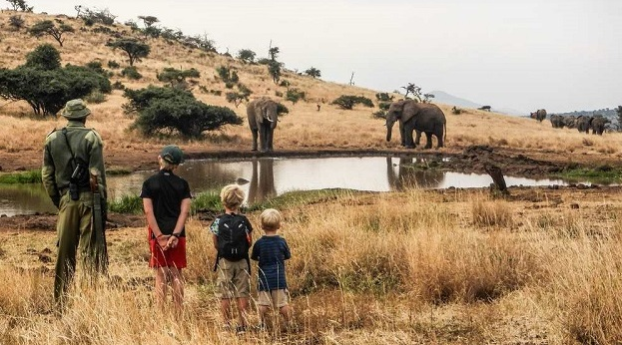

Where elephants cross the road, lions roam at dawn, and children discover that the natural world is more extraordinary than anything they have ever imagined — Tanzania’s family safari is the journey that changes young lives forever.
Introduction
There is a particular expression that appears on a child’s face at a certain moment on an African safari — a moment that parents who have witnessed it describe with unusual consistency and emotion. It happens when the vehicle rounds a bend and an elephant is simply there, enormous and unhurried, crossing the road five meters ahead. Or when a pride of lions is spotted from the vehicle, the cubs tumble over each other in the long grass while the lioness watches with regal indifference. Or when a herd of wildebeest stretches to every horizon and the child understands, for the first time in their life, what the word “vast” actually means.
The expression is not excitement, exactly. It is something quieter and more profound: the recognition, arriving with sudden and complete clarity, that the world is far larger, far wilder, and far more magnificent than anything a classroom, a screen, or a city street has ever suggested. It is the expression of a young mind being genuinely, permanently expanded.
Tanzania is the finest destination in the world for this experience. Its wildlife is more abundant, more accessible, and more reliably visible than almost anywhere else on the African continent. Its safari infrastructure — accommodation, vehicles, guides, and activity options — has developed with growing sophistication to cater specifically to families traveling with children of all ages. And the combination of mainland wildlife parks with Zanzibar’s beaches, Stone Town history, and Indian Ocean marine life creates a family journey of extraordinary variety that sustains engagement and wonder across every age group from young children to grandparents.
This article is your complete guide to planning the perfect Tanzania family safari — covering the best destinations for families, the right time to go, how to choose family-appropriate accommodation and activities, age considerations, health preparations, and everything that ensures your family’s Tanzania journey is not merely a holiday but a genuinely defining shared experience.
Why Tanzania Is Africa’s Premier Family Safari Destination
Unmatched Wildlife Accessibility
The fundamental requirement of a successful family safari is wildlife that is visible, accessible, and reliably encountered — because children, unlike adult travelers who can philosophically accept a quiet game drive, need regular engagement to sustain the attention and enthusiasm that make a safari meaningful rather than exhausting. Tanzania delivers on this requirement more consistently than any other African country.
The Ngorongoro Crater’s enclosed geography virtually guarantees extraordinary wildlife encounters within a single game-drive day — lion, elephant, buffalo, hippo, and the rare black rhinoceros are all present in concentrated proximity, meaning that even the youngest family members are essentially guaranteed the iconic Africa wildlife moments they have seen in books and documentaries. For families with very young children or first-time safari travelers of any age, this predictability is invaluable.
The Serengeti’s Great Migration — when it intersects with a family’s visit — creates wildlife experiences so vivid and so scale-defying that they require no adult interpretation or encouragement to engage children. When a million wildebeest are visible from the vehicle, children do not need to be told that this is extraordinary. They know.
Education Woven Into Every Drive
Tanzania’s wildlife encounters are inherently educational in ways that engage children at multiple levels simultaneously. The interdependence of predator and prey, the social structures of elephant herds, the engineering marvel of a termite mound, the behavioral intelligence of a cheetah hunt, the ecological role of the dung beetle navigating by the Milky Way — each game drive is a living natural history lesson delivered by guides whose ecological knowledge and gift for accessible explanation transform the safari vehicle into the finest classroom any child will ever occupy.
Many of Tanzania’s leading family safari operators provide junior ranger programs — age-appropriate wildlife education activities, bush craft sessions, spoor identification guides, and illustrated species checklists that give children their own active role in the safari rather than positioning them as passive observers of adult experience. Children who engage with the bush in this way return home with an ecological literacy and a conservation awareness that formal education rarely delivers with comparable depth or permanence.
The Zanzibar Dimension for Families
Zanzibar extends the Tanzania family journey into a beach and culture chapter of genuine richness that complements the mainland safari with a different but equally valuable set of experiences. The island’s calm northern beaches — particularly Nungwi and Kendwa — provide shallow, warm, safe swimming conditions ideal for children of all ages. Snorkeling above the coral reefs introduces younger family members to marine biodiversity in a gentle, accessible format. The Stone Town guided walk delivers an interactive history and culture experience that engages children through the sensory richness of its markets, architecture, and street life in ways that museum visits rarely achieve. And the spice tour — handling cloves, vanilla, cinnamon, and cardamom in working plantation gardens — creates a multi-sensory educational experience that connects Tanzania’s economic and agricultural history to the spices children encounter in their daily lives at home.
Tanzania’s Best Family Safari Destinations
Ngorongoro Crater: The Family Safari Anchor
The Ngorongoro Crater is, by wide consensus among family safari specialists, the single best Tanzania destination for families traveling with young children. The crater’s enclosed geography means that wildlife is always present and always viewable — there are no long, empty drives between sightings that test the patience of young travelers. The picnic lunch at the Ngoitokitok Picnic Site beside a hippo pool adds an interactive dimension to the game-drive day. The crater rim lodges provide spectacular panoramic views and comfortable, weather-proof accommodation — the rim’s 2,300-meter elevation creates cool, pleasant temperatures that are a welcome contrast to the lowland heat.
One to two full crater game-drive days is the standard family allocation. The enclosed geography means that the crater does not reward extended stays the way the Serengeti does — two days allows for thorough exploration of all habitat zones and dramatically increases the probability of a black rhino encounter.
The Serengeti National Park: Wildlife on an Epic Scale
The Serengeti provides family safari experiences of a scale and drama that younger visitors find genuinely transformative. The park’s open landscapes, consistent predator populations, and seasonal migration spectacles create the kind of overwhelming wildlife abundance that produces the permanent wildlife memories described at the beginning of this article.
For families, three to four Serengeti nights is the recommended minimum — enough time for both morning and evening game drives on multiple consecutive days, allowing the rhythm of predator activity to be observed across the full cycle of daily behavior. Permanently staffed Serengeti camps with family accommodation units — typically consisting of two interconnected tents or rooms allowing parents and children to be adjacent but independently sleeping — are increasingly available at mid-range and luxury properties.
Family-specific activities within the Serengeti include junior ranger programs at several premier camps, night sky astronomy sessions that use Tanzania’s extraordinary stargazing conditions to introduce children to basic astronomy and astrophysics, and bush breakfast stops in the field that transform a utilitarian mid-morning break into a memorable outdoor experience.
Tarangire National Park: Elephants and Baobab Magic
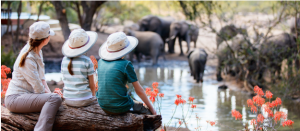
Tarangire is exceptionally well-suited to families with children who are particularly captivated by elephants — which, in the experience of most family safari operators, encompasses the majority of children who travel to Africa. The park’s dry-season elephant concentrations are among Africa’s most accessible and most impressive, with herds of hundreds of animals gathering at the Tarangire River in processions that hold children’s attention with remarkable consistency.
The park’s ancient baobab trees have an immediate and powerful appeal to younger travelers — their sheer scale, their extraordinary shapes, and the ecological stories that experienced guides weave around them (baobab trees as natural water storage tanks, as habitat for dozens of bird and mammal species, as the “pharmacies” of traditional medicine) create engagement that wildlife encounters alone sometimes do not. One to two nights makes Tarangire a richly rewarding family addition to any northern circuit itinerary.
Lake Manyara National Park: Compact, Diverse, and Perfectly Paced
Lake Manyara is particularly suited to families because its compact geography delivers remarkable habitat diversity — dense groundwater forest, open floodplains, and alkaline lake margins — within a short game-drive distance, meaning that the variety of wildlife encounters is high relative to the time invested. Tree-climbing lions are an immediate favorite with younger travelers, combining the familiar appeal of big cats with the surprising behavioral curiosity of finding them draped in the branches of fig trees above the road. The lake’s flamingo flocks create striking color and movement that engage even the youngest family members.
Manyara is typically incorporated as a half-day or full-day en-route park on the transfer between Arusha and the deeper northern circuit parks, functioning as an excellent “warm-up” wildlife experience that prepares families for the more intense encounters ahead.
Age Considerations for Tanzania Family Safaris
Infants and Toddlers (Under 4 Years)
Tanzania safaris with very young children require careful planning and operator consultation. The early morning starts required for optimal game viewing — typically before sunrise — conflict with infant sleep schedules in ways that can create family stress. Vehicle time in an open safari Land Cruiser over uneven bush roads can be physically demanding for very young children. Most luxury lodges and camps have no age restrictions but may lack dedicated children’s facilities. The Ngorongoro Crater, with its relatively smooth crater floor and compact game-drive area, is the most family-friendly destination for very young travelers. Zanzibar’s beaches and calm resort environments are entirely suitable for infants and toddlers and may provide the most comfortable and rewarding component of the journey for this age group.
Young Children (4–8 Years)
This is a genuinely excellent age range for Tanzania family safari. Children aged four to eight are old enough to appreciate wildlife encounters, remember them vividly, and articulate their emotional responses — but young enough that the sense of wonder that Tanzania consistently evokes is still at its most powerful and uninhibited. The Ngorongoro Crater and Tarangire’s elephant herds are particularly effective with this age group. Most specialist family safari operators provide junior ranger activities, wildlife activity books, and field guides specifically designed for this age range. Game drive durations should be managed to approximately three to four hours maximum in any single session.
Older Children and Teenagers (9–17 Years)
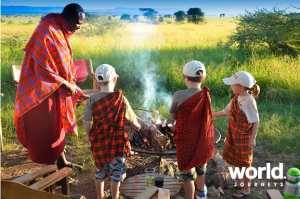
Older children and teenagers are capable of the full Tanzania safari experience and frequently develop a depth of engagement with ecology, conservation, and wildlife behavior that rivals and sometimes exceeds adult travelers in its intensity and its lasting impact. Walking safaris (minimum age typically 12 to 16 years depending on operator), night game drives, guided bush walks, and cultural Maasai visits all become fully accessible for this age group and provide the interactive, physically engaged experiences that teenagers particularly value. The Serengeti’s Great Migration, in all its phases, produces impressions in older children and teenagers that frequently shape conservation career choices and lifelong wildlife advocacy.
Family-Friendly Safari Accommodation
Tanzania’s accommodation sector has developed family-specific products with increasing sophistication. Key criteria for family accommodation selection include:
Interconnected Family Units: Adjacent tents or rooms sharing a common entrance allowing parents to be close to children without sharing sleeping space. The best family units provide this configuration as standard.
Child Safety Features: Fencing or natural barriers around accommodation perimeters, secured swimming pools where provided, child-proof storage for insect repellents and medications, and staff who are experienced with and genuinely welcoming of young guests.
Flexible Meal Timing: Families with young children benefit from accommodation that can provide early suppers for children before adult dinner service — a seemingly minor logistical detail that significantly reduces family stress on longer itineraries.
Junior Ranger Programs: The finest family safari camps in Tanzania — including several leading Serengeti properties — provide dedicated wildlife education programs for children that run parallel to adult game drives and evening activities, ensuring that every family member is engaged at an age-appropriate level throughout the stay.
Health and Safety Preparation for Tanzania Family Safaris
All Tanzania travelers, including children, require malaria prophylaxis — consult a travel medicine specialist at least six to eight weeks before departure to allow time for vaccination courses and to identify the most appropriate antimalarial medication for children at different ages and weights. Yellow fever vaccination is broadly recommended. Hepatitis A, typhoid, and routine childhood vaccinations should be confirmed up to date. High-DEET insect repellent in child-appropriate formulations, UV-protective clothing, and wide-brimmed hats are essential for all family members.
Comprehensive travel insurance including medical evacuation coverage is non-negotiable — Tanzania’s remote safari parks require helicopter or light aircraft evacuation for serious medical incidents, and the cost without insurance can be catastrophic.
Key Takeaways
- Tanzania is Africa’s premier family safari destination — combining near-certain wildlife encounters, educational depth, family-specific accommodation, and a Zanzibar beach extension of extraordinary variety.
- Ngorongoro Crater is the single best destination for families with young children — concentrated wildlife in an enclosed geography virtually guarantees extraordinary encounters within a single game-drive day.
- The Serengeti delivers scale-defying wildlife experiences — particularly the Great Migration — that create permanent wildlife memories for children and teenagers of all ages.
- Tarangire’s elephant herds and ancient baobab landscape provide some of Tanzania’s most child-engaging wildlife and environmental experiences.
- Junior ranger programs at leading Tanzania camps transform children from passive observers into active wildlife learners — look for operators who provide dedicated educational activities alongside standard game drives.
- Age appropriateness matters: infants and toddlers are most comfortable at Ngorongoro and Zanzibar; young children (4–8) thrive on the full northern circuit; teenagers can access the complete range of Tanzania safari activities.
- Family accommodation units with interconnected rooms, child safety features, flexible meal timing, and dedicated children’s programming are essential criteria for accommodation selection.
- Zanzibar extends the family journey with safe beach swimming, Stone Town cultural history, snorkeling marine encounters, and the spice tour — providing educational and recreational variety that sustains family engagement beyond the bush.
- Malaria prophylaxis for all family members, comprehensive travel insurance with medical evacuation, and consultation with a travel medicine specialist six to eight weeks before departure are non-negotiable health preparations.
- Book with a TATO-accredited family safari specialist — operators with demonstrable family safari experience understand the pacing, activity management, and accommodation requirements that determine whether a family safari is genuinely memorable or merely stressful.
Questions & Answers
Q: What is the minimum age for a Tanzania family safari? Tanzania imposes no national minimum age for safari travel, and several leading family safari operators welcome children of all ages. However, practical considerations suggest that children under the age of four experience the greatest challenge with early morning departure times, long vehicle journeys on rough roads, and the patience required for extended wildlife watching. Most wildlife conservation areas and national parks have no formal minimum age restriction for game drives conducted from closed or open vehicles. Walking safaris typically require a minimum age of 12 to 16 years depending on operator safety policy. Hot air balloon safaris generally require children to be at least seven years old and weigh under 100 kilograms. The most important guidance is to consult your specialist family safari operator, who will assess your specific family’s composition, the ages of children involved, and design an itinerary paced and structured appropriately.
Q: How do I manage children’s energy and attention during long game drives? The most effective strategy is to structure game drives around natural wildlife activity patterns rather than driving continuously for maximum distance. Morning drives of two to three hours — ending with a bush breakfast in the field — followed by a midday break at camp for swimming, junior ranger activities, or rest, then an afternoon drive of two to three hours, works well for most children aged four to twelve. Keep wildlife identification books, illustrated species checklists, and binoculars of appropriate size for children in the vehicle — active participation in spotting and identifying animals transforms passive passengers into engaged wildlife detectives. Experienced family safari guides naturally calibrate their narrative and their pacing to the ages of children in the vehicle, providing more interactive, question-driven engagement for younger travelers. Snacks and water are always available in quality safari vehicles, and experienced guides know that a well-timed snack stop under an acacia tree is frequently as memorable for young children as the wildlife encountered immediately before it.
Q: Is Tanzania safe for families with children? Tanzania is one of Africa’s most politically stable and travel-safe destinations, and with appropriate precautions the safety risks of a family safari are entirely manageable. Wildlife safety is governed by experienced, licensed guides whose professional responsibility and personal commitment to guest safety — including children — is absolute. Families remain in vehicles during game drives, follow guide instructions without exception, and stay within camp perimeters after dark. Health risks — primarily malaria and sun exposure — are managed through prophylaxis, repellent, and UV-protective clothing. Road safety on transfers between parks is the most statistically significant risk for safari travelers in Tanzania; using reputable operator vehicles and drivers managed to professional standards reduces this risk substantially. The overwhelming experience of families who complete Tanzania safaris is of a journey that felt considerably safer in practice than it appeared on paper before departure.
Q: What should children pack for a Tanzania family safari? Children’s packing lists should include neutral-colored safari clothing in khaki, olive, or beige — multiple light layers for the cool pre-dawn game drive departures and warm midday temperatures. A warm fleece for early morning drives is essential even in summer months. Closed shoes or light hiking boots for walking activities. Wide-brimmed sun hat for extended outdoor exposure. High-factor, child-appropriate sunscreen applied before every drive. High-DEET insect repellent in child-appropriate formulations — spray or lotion, applied to exposed skin at dusk and dawn. Personal binoculars sized for children — even entry-level 8×32 optics dramatically enhance the game-drive experience for older children. A wildlife field guide for Tanzania appropriate to the child’s age and literacy level. For Zanzibar: swimwear, rash vest for reef snorkeling, reef-safe sunscreen, and sandals. Luggage for light aircraft transfers must be in soft-sided bags within strict weight limits — typically 15 kilograms per person — plan children’s packing with this constraint firmly in mind.
Q: How does the Tanzania family safari compare to alternatives like Kenya or South Africa for families? All three destinations offer excellent family safari experiences, but Tanzania’s combination of wildlife density, iconic park variety, and the Zanzibar beach extension creates a dual-destination family journey of particular completeness. Kenya’s Maasai Mara offers comparable wildlife quality in the northern Serengeti ecosystem but lacks Tanzania’s broader park diversity and the Zanzibar dimension. South Africa’s Kruger National Park region — including private conservancies in Limpopo and Mpumalanga — offers excellent family safari infrastructure with the additional advantages of no malaria risk in some private concessions and no vaccination requirements for most nationalities. For families primarily motivated by the Great Migration spectacle, the Big Five, and the Indian Ocean beach extension, Tanzania’s combination is unmatched. For families concerned about malaria risk or seeking maximum accommodation comfort in the bush, South Africa’s private game reserves merit serious consideration as an alternative.
Q: What is the best overall Tanzania family safari itinerary? A ten-night family itinerary balancing the northern circuit’s finest parks with a Zanzibar beach chapter represents the gold standard for most Tanzania family safari. Three nights in Zanzibar — Stone Town, northern beach, snorkeling introduction — provides a gentle, warm arrival into East Africa that acclimatizes families before the bush adventure begins. One to two days at Tarangire introduces elephant herds and the baobab landscape as a richly engaging warm-up. One full crater day at Ngorongoro delivers near-certain Big Five encounters that vindicate the journey for every family member. Three nights in the Serengeti — distributed between central and, if migration season, northern zones — creates the scale and predator drama that produce the defining family memories. Return to Zanzibar for two final beach nights provides the restorative conclusion that makes the transition home feel like a gentler landing. Adjust the mainland-to-island allocation based on the ages of children, the season of travel, and individual family priorities for wildlife depth versus beach relaxation.
Conclusion
The Tanzania family safari occupies a unique position in the landscape of family travel experiences because it delivers something that most family holidays — however enjoyable, however well-designed — simply cannot: the experience of genuine encounter with the wild world, in a form so vivid, so unmediated, and so overwhelming in its beauty and scale that it bypasses the protective layers of childhood sophistication and reaches something more fundamental.
Children who grow up having watched a cheetah teach her cubs to hunt on the Serengeti plains carry that experience differently from children who only know wildlife from screens. It is not merely that they have seen something extraordinary. It is that they have understood, at a deep and pre-verbal level, that the world contains magnificence of a kind that cannot be manufactured or curated or streamed — that requires going to where it lives and being present within it.
This understanding shapes things. It shapes career choices and conservation commitments and the way a teenager argues for environmental protection in a school debate. It shapes the adult who, years later, finds themselves explaining to their own children what a migration river crossing looks and sounds and smells like, and realizing that the memory is still entirely, immediately vivid. It shapes the family story — the shared reference point that “Tanzania” becomes, the shorthand for “the time we saw something we could not believe was real.”
Tanzania gives families this. Not in every moment — there will be early mornings that are cold and difficult, drives that produce fewer sightings than hoped, days when young children are tired and reluctant. But in the moments that matter, in the encounters that the Serengeti and the Ngorongoro Crater and the Tarangire elephants deliver with the reliability of a great natural system functioning exactly as it has for millions of years, Tanzania gives families something that no other destination on Earth provides with comparable generosity.