
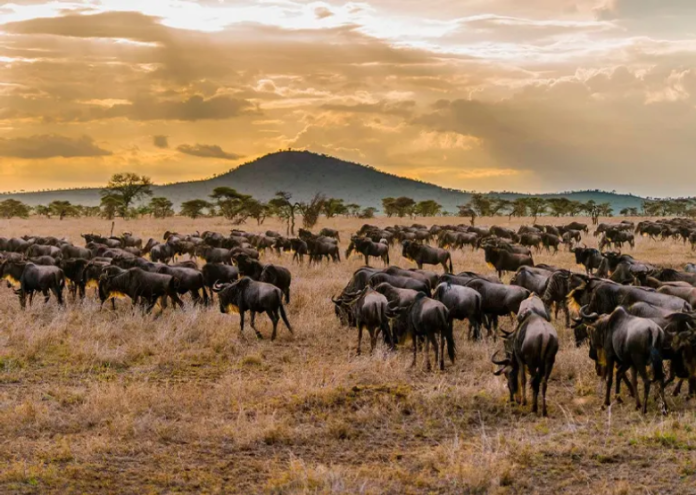

There are moments in nature so raw, so overwhelming, so deeply humbling that they redefine your understanding of the living world. The Great Wildebeest Migration across the Serengeti is one of those moments. Over 1.5 million wildebeest, accompanied by hundreds of thousands of zebras and gazelles, move in a vast, relentless circle across Tanzania and Kenya — driven by nothing more than instinct, grass, and rain. Serengeti migration safari tours exist to put you right at the heart of this extraordinary phenomenon, safely, responsibly, and unforgettably.
This guide is your definitive companion to planning, understanding, and experiencing the Serengeti migration. From the biology of the migration to the best camps, ideal travel windows, and everything in between — if you are serious about witnessing the world’s greatest wildlife spectacle, this is where your journey begins.
What Is the Great Wildebeest Migration?
The Great Migration is the largest overland wildlife movement on Earth. Each year, approximately 1.5 million wildebeest, 400,000 zebras, and 200,000 Thomson’s gazelles follow a clockwise, 800-kilometer circular route through the Serengeti ecosystem in northern Tanzania and the Maasai Mara in Kenya.
This is not a one-time event. It is a continuous, year-round cycle governed by rainfall patterns and the resulting growth of fresh grass. The herds are always moving — calving in the south, trekking northward through the central plains, crossing deadly rivers in the north, and retreating south again as the rains return. Every stage of this cycle offers dramatic, emotionally charged wildlife encounters that no other destination on Earth can replicate.
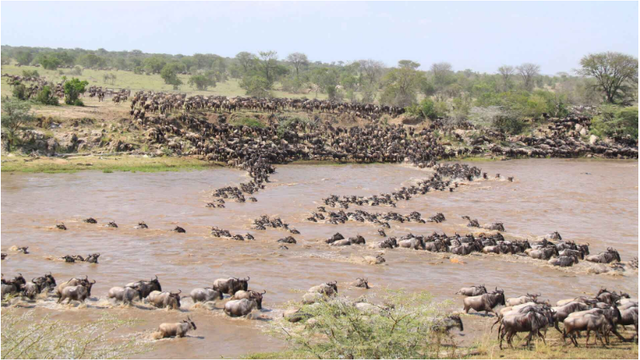
What makes the migration truly legendary — and the reason Serengeti migration safari tours draw travelers from every corner of the globe — are the Mara River crossings. During July to September, the wildebeest must cross the crocodile-infested Mara River multiple times as they push into Kenya and retreat back into Tanzania. These crossings are chaotic, terrifying, and utterly mesmerizing. Crocodiles lunge from the water, lions patrol the banks, and the thundering mass of animals creates a sensory experience unlike anything else in the natural world.
The Migration Calendar: When to Go and What to See
One of the most important things to understand about Serengeti migration safari tours is that the experience changes dramatically depending on when you travel. Here is a month-by-month breakdown:
January – February: The Calving Season (Southern Serengeti)
The herds gather in the short-grass plains of the southern Serengeti and Ndutu region for calving season. Approximately 8,000 wildebeest calves are born every single day during peak calving, typically between late January and mid-February. This extraordinary concentration of vulnerable young animals draws lions, cheetahs, leopards, hyenas, and wild dogs in large numbers. The predator action during calving season rivals — and in some respects surpasses — the river crossings for sheer drama.
March – May: The Long Rains and Northward Trek
As the rains arrive and the southern plains flood, the herds begin their long northward march through the central Serengeti. This is a quieter period for tourism, with lush green landscapes, lower prices, and fewer crowds. Birdwatching is exceptional during this time, and the migrating columns of animals can still be tracked and observed on game drives.
June – July: The Western Corridor and Grumeti River
By June, the herds have reached the western Serengeti, where they face their first major river obstacle — the Grumeti River. Home to enormous Nile crocodiles, the Grumeti crossings are less dramatic than the Mara but equally thrilling. This is an underrated period for Serengeti migration safari tours, as the drama is high and the crowds are lower than in peak season.
July – September: The Mara River Crossings (Northern Serengeti)
This is peak migration season — the period most Serengeti migration safari tours are built around. The herds push into the northern Serengeti and begin their iconic crossings of the Mara River. These crossings are unpredictable; the wildebeest may cross in a surge of thousands or hesitate for hours before plunging in. The anticipation is part of the experience. Camps in the Kogatende and Lamai areas offer the best access to the crossing points.
October – November: The Return South
As the short rains begin in Tanzania, the herds retreat southward through the eastern Serengeti corridor, completing their loop. This transitional period offers excellent game viewing with fewer tourists and a sense of witnessing the quieter, less-celebrated side of the migration.
December: Return to the Southern Plains
The herds arrive back in the southern Serengeti, completing the annual cycle. The landscape turns green, and the stage is set for the calving season to begin again.
Types of Serengeti Migration Safari Tours
Not all migration safaris are the same. The type of tour you choose shapes every aspect of your experience.
Mobile Tented Camp Safaris
The most immersive way to follow the migration. Mobile camps relocate seasonally to position guests as close as possible to the herds. Staying in a well-appointed tented camp with the sound of wildebeest and lions outside your canvas walls is the authentic, classic Serengeti experience that travelers dream about.
Fixed Lodge Safaris
Permanent lodges and camps positioned strategically in the northern, central, and southern Serengeti offer high levels of comfort with reliable access to the migration. Ideal for travelers who prefer consistency of accommodation without sacrificing wildlife proximity.
Luxury Private Migration Safaris
For those seeking exclusivity, private migration safari packages include dedicated vehicles, personal guides, butler service, and access to exclusive-use concessions bordering the Serengeti. These tours offer unmatched flexibility — staying at crossing points for as long as needed, dining under the stars, and experiencing the Serengeti without another vehicle in sight.
Hot Air Balloon Safaris
One of the most breathtaking ways to witness the migration is from above. Hot air balloon safaris launch at dawn over the Serengeti plains, offering sweeping aerial views of the herds, river systems, and wildlife below. Most balloon flights conclude with a champagne bush breakfast — a truly once-in-a-lifetime experience.
Group Departure Safaris
Scheduled group tours offer an affordable way to experience the migration alongside like-minded travelers. Operated by established tour companies with fixed departure dates, these packages are especially popular with solo travelers and those seeking a social safari experience.
Family Migration Safaris
Specially designed for families, these tours combine age-appropriate wildlife education, flexible schedules, and family-friendly accommodations. Seeing a child’s face light up at their first wildebeest crossing is a memory that lasts generations.
Best Camps and Locations for the Migration
Northern Serengeti – Kogatende and Lamai
The undisputed capital of the Mara River crossings. Camps in this area position guests within minutes of the primary crossing points. Lamai Serengeti, andBeyond Serengeti Under Canvas, and Singita Lamai are among the most celebrated camps in the world for good reason.
Southern Serengeti – Ndutu
For calving season, the Ndutu area offers unrivalled access to the birthing grounds. Ndutu Safari Lodge and &Beyond Ndutu Under Canvas are positioned perfectly for the January–February calving spectacle.
Western Corridor – Grumeti
For the Grumeti River crossings, the Singita Grumeti concession offers some of the most exclusive and well-managed wildlife experiences in Africa, with vast private land and minimal vehicle congestion.
Essential Tips for Booking Serengeti Migration Safari Tours
- Book 12 Months in Advance for Peak Season: July to September in the northern Serengeti is the most sought-after safari period in Africa. Top camps sell out a year or more ahead.
- Follow the Migration, Not the Calendar: Work with a knowledgeable operator who tracks the herd movements in real time and can adjust itineraries accordingly. No migration crossing is guaranteed.
- Combine Multiple Serengeti Zones: To maximize your chances of witnessing different migration stages, plan an itinerary that moves between the southern, central, and northern Serengeti.
- Pack the Right Camera Gear: A telephoto lens (300–500mm) is essential for quality wildlife photography. Bring extra batteries and memory cards — you will use them.
- Choose Ethical Operators: Ensure your operator follows responsible wildlife viewing guidelines. No more than three vehicles at a sighting, no off-road driving near vulnerable animals, and no chasing or disturbing wildlife.
- Allow for Flexibility: The migration is wild and unpredictable. Build buffer days into your itinerary and trust your guide’s instincts.
- Combine With Ngorongoro or Tarangire: A multi-park itinerary adds enormous value. The Ngorongoro Crater and Tarangire National Park complement the Serengeti beautifully in terms of landscape diversity and resident wildlife.
Why the Serengeti Migration Is a Once-in-a-Lifetime Experience
It is easy to understand intellectually why the Great Migration is considered the greatest wildlife spectacle on Earth. The numbers are staggering, the predator interactions are cinematic, and the ecological scale is incomprehensible. But nothing truly prepares you for standing on the Mara River bank as ten thousand wildebeest plunge into the water simultaneously, the air filled with dust, roaring crocodiles, and the thundering percussion of hooves.
Serengeti migration safari tours do not just deliver a wildlife encounter. They deliver perspective. In a world of increasing urbanization and digital distraction, watching 1.5 million animals move instinctively across an ancient landscape reconnects you to something essential — the raw, unscripted vitality of the natural world. People return from the Serengeti changed. That is not a marketing language. It is the consistent testimony of travelers who have made the journey.
Conclusion
The Serengeti migration is not a checkbox on a bucket list. It is a living, breathing, unpredictable spectacle that demands respect, patience, and presence. Serengeti migration safari tours are designed to bring you into this ancient drama responsibly, comfortably, and with the expertise of guides who know these plains as intimately as their own homes.
Whether you choose the drama of the Mara River crossings, the tenderness of calving season, or the raw beauty of the herds crossing the western corridor, the Serengeti will exceed every expectation you arrive with. Book early, plan carefully, choose ethical operators, and then surrender to the experience. The migration has been running for millions of years. It will not disappoint.
Your place on those plains is waiting.

Key Takeaways
- The Great Wildebeest Migration is a year-round event — the best stage to witness depends entirely on when you travel.
- July to September offers the famous Mara River crossings in the northern Serengeti; January–February delivers the equally spectacular calving season in the south.
- Mobile tented camps that follow the herds offer the most immersive migration experience; luxury private safaris offer the most exclusive.
- Book 12 months in advance for peak-season camps — top properties in the northern Serengeti sell out far ahead of time.
- No crossing is ever guaranteed — work with operators who track herds in real time and build flexibility into your itinerary.
- The migration is best experienced across multiple Serengeti zones — combine northern, central, and southern areas for the full story.
- Always choose operators who follow responsible wildlife viewing ethics to protect the animals and the ecosystem.
Frequently Asked Questions (FAQ)
Q1: What is the best month to see the Great Migration river crossings in the Serengeti? The Mara River crossings typically peak between July and September, when the herds are in the northern Serengeti. However, crossings can begin as early as late June and extend into October depending on rainfall patterns. No crossing can be pinpointed to an exact date — flexibility is key.
Q2: How long should a Serengeti migration safari tour be? A minimum of 5–7 days in the Serengeti is recommended to maximize your chances of witnessing a river crossing. A 10–14 day itinerary allowing you to move between zones — and combining the Serengeti with Ngorongoro or Tarangire — delivers a far richer overall experience.
Q3: How much does a Serengeti migration safari tour cost? Costs vary significantly by tier. Budget group tours start from approximately USD $250–$350 per person per day. Mid-range packages range from $400–$700 per day, and luxury or private safari experiences can range from $1,000–$2,500+ per person per day. Peak season commands premium rates.
Q4: Is the migration only in the Serengeti? No. The Great Migration is a circular journey that crosses from Tanzania’s Serengeti into Kenya’s Maasai Mara and back. The Mara River crossings occur along the border zone between the two countries. Tanzania-based Serengeti migration safari tours focus on the Tanzanian portion of this route, which covers the majority of the annual cycle.
Q5: Can I see the migration year-round in the Serengeti? Yes. The herds are always present somewhere within the greater Serengeti ecosystem throughout the year. The dramatic river crossings are seasonal (July–September), but calving (January–February) and the movement of massive herds through the central plains (May–June) are equally compelling experiences.
Q6: Are children suitable for Serengeti migration safari tours? Yes, with the right planning. Many operators offer family-specific migration packages with experienced guides who engage younger guests, child-appropriate pacing, and family-suite accommodations. Children above the age of 6 generally handle game drives well. Some camps have minimum age requirements for certain activities — check with your operator in advance.
Q7: What should I pack for a Serengeti migration safari? Essential items include neutral-colored clothing (khaki, olive, beige), a wide-brimmed hat, high-SPF sunscreen, insect repellent, a quality camera with telephoto lens, binoculars, a light fleece or jacket for early-morning drives, and any personal medication including malaria prophylaxis. Pack light — domestic bush flights have strict luggage limits (usually 15 kg in a soft bag).
Q8: Do I need to visit the Maasai Mara to see the full migration? Not necessarily. Tanzania’s northern Serengeti provides excellent access to the Mara River crossings from the Tanzanian side. Many travelers opt for a Tanzania-only migration safari and see everything they could hope for. Combining both countries requires crossing the Kenya–Tanzania border and adds complexity and cost, though it can be arranged through experienced operators.